
Visiting Kensington Palace 2026: Tickets, Tours, Hours and Who Lives There
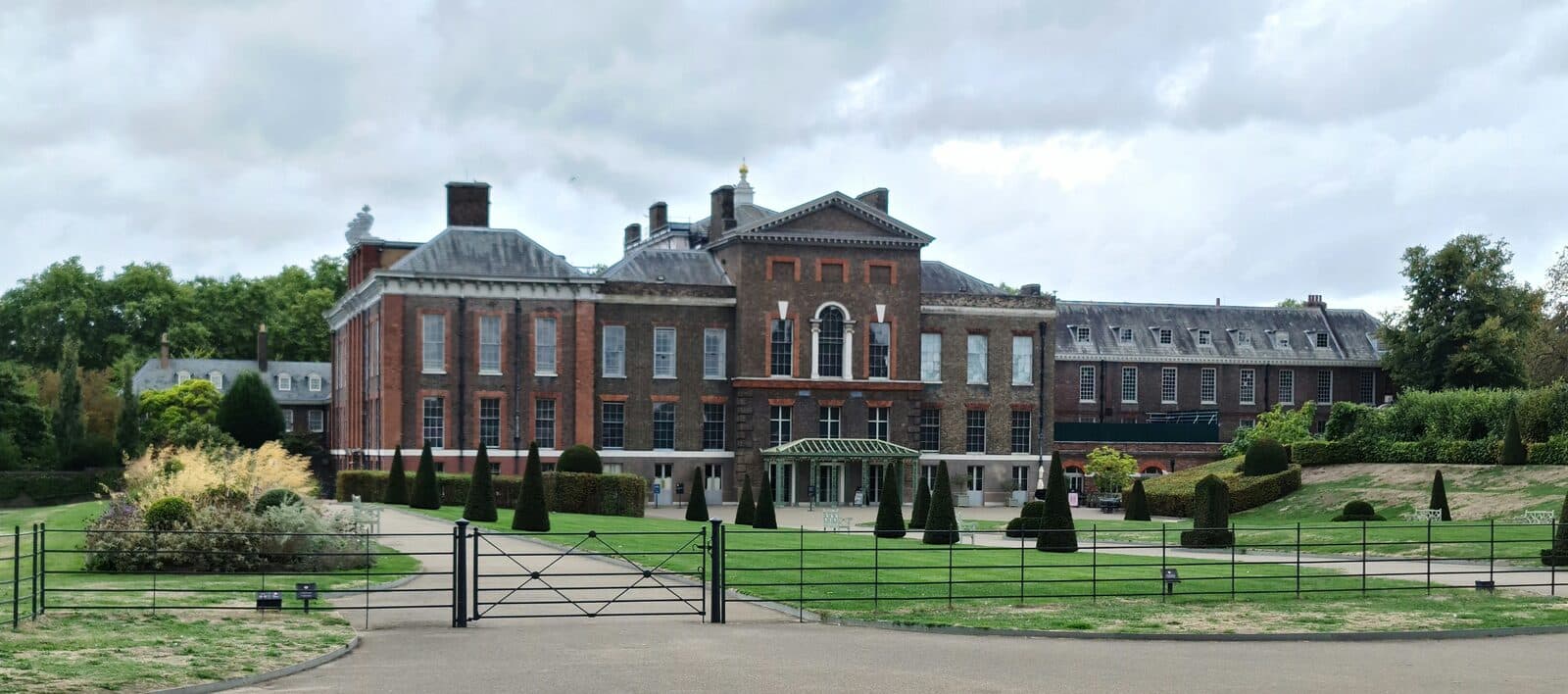
Visiting Kensington Palace in 2026: Tickets, Tours, and Who Lives There
Kensington Palace has been a working royal home since 1689, and it is still one of the few London royal residences where you can walk through state rooms one minute and pass the gates of a Prince and Princess's London apartment the next. This is the complete 2026 visitor guide, written from the Holiday Inn London – Kensington Forum at 97 Cromwell Road — a 25-minute walk south of the palace gates — with prices, hours, exhibitions and who currently lives there all checked against Historic Royal Palaces, the charity that runs the site.
Last verified: 20 August 2026.
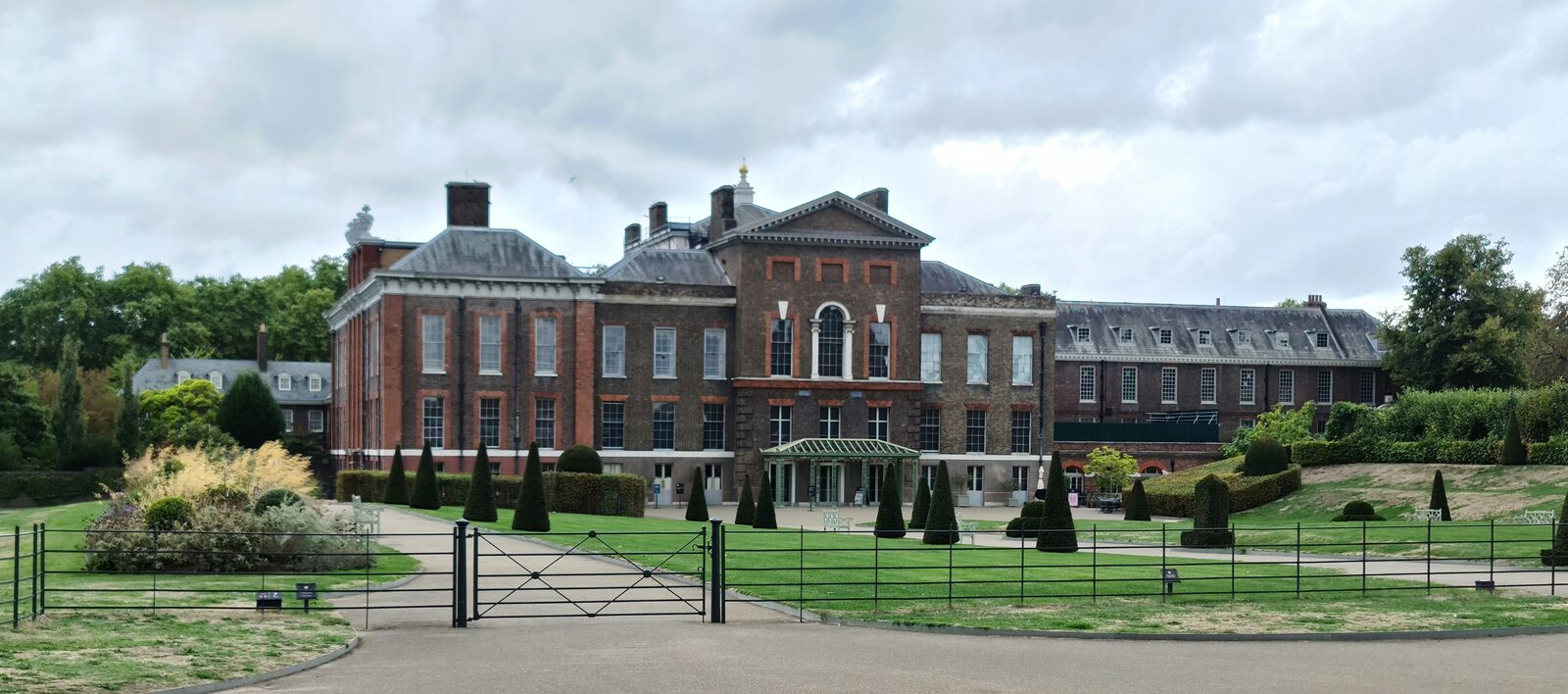
Can you actually visit Kensington Palace?
Yes — the King's State Apartments, the Jewel Room, the Victoria rooms, the current exhibition and the gardens (including the Sunken Garden with the Princess Diana statue unveiled on 1 July 2021) are open to ticket-holders. The Queen's State Apartments are closed until spring 2027 for re-presentation. What you cannot enter are the working royal apartments — Apartment 1A (the Prince and Princess of Wales), Apartment 10 (Prince and Princess Michael of Kent), Wren House (the Duke of Kent), Old Stables (the Duke and Duchess of Gloucester) and Ivy Cottage (Princess Eugenie). Those are private homes inside the palace complex; the public route is carefully separated from them.
The palace was opened to the public on Queen Victoria's birthday — 24 May 1899 — and has been a paid-entry, charity-run attraction since Historic Royal Palaces took over management in 1989. It became an independent charity in 1998 and reopened after a £12 million renovation in 2012, during Queen Elizabeth II's Diamond Jubilee.
Kensington Palace ticket prices in 2026
All prices below are daytime admission to the palace (King's State Apartments, Jewel Room, Victoria rooms and, until 8 November 2026, The Last Princesses of Punjab). The Queen's State Apartments are not included — they are closed. Source: Historic Royal Palaces — Tickets and prices, figures published as valid until 28 August 2026; check the HRP page before you travel in case the autumn rate card has moved.
| Ticket type | Price (2026) | Notes |
|---|---|---|
| Adult | £24.70 | Includes Last Princesses of Punjab until 8 November 2026 |
| Child (under 16) | £12.40 | Per the HRP site |
| HRP Member | Free | Membership from £65 a year; covers all six HRP palaces |
| £1 community ticket | £1.00 | For visitors in receipt of qualifying UK benefits — book via HRP £1 tickets |
A few practical points we tell guests at the hotel:
- Pre-booking is recommended but not mandatory. Tickets are slightly cheaper online than on the door, and on busy weekends (especially around half-term) the door queue can be 20–30 minutes long.
- Gardens are free, and they close. Kensington Gardens — Round Pond, Albert Memorial, Italian Gardens — is managed by The Royal Parks, is free, and closes at dusk. Hyde Park, which joins it to the east, stays open 05:00–00:00. Do not plan an after-dark walk back through the Gardens.
- Audio guide is included in the standard ticket price and is the best way to navigate the King's Staircase commentary.
- HRP membership pays back fast. If you're also doing the Tower of London and Hampton Court Palace in the same trip, annual membership from £65 costs less than three separate adult tickets.
Opening hours in 2026 (and the Queen's State Apartments closure)
Kensington Palace is open Wednesday to Sunday (closed Monday and Tuesday).
| Season | Opening hours | Last admission |
|---|---|---|
| Summer — 1 March to 31 October | 10:00 – 18:00 | 17:00 |
| Winter — 1 November to 28 February | 10:00 – 16:00 | 15:00 |
The palace is closed 24, 25 and 26 December each year.
The Queen's State Apartments closed on 15 June 2026 and stay closed until spring 2027 for a major conservation and re-presentation project (HRP). These are the rooms most associated with Queen Mary II — Queen's Staircase, Queen's Closet, Queen's Gallery. A standard ticket now covers the King's State Apartments, the Jewel Room, the Victoria rooms and (until 8 November 2026) The Last Princesses of Punjab. Check the official Kensington Palace site before you travel.
What you actually see on a Kensington Palace tour
A full self-guided tour, including the audio guide, takes about 2 to 2.5 hours. The route runs roughly like this:
The King's Staircase
The dramatic entry to the King's State Apartments, painted in 1724 by William Kent — his first major royal commission. Kent painted forty-five figures from the court of George I onto the walls in trompe-l'œil, including the King's two Ottoman servants Mahomet and Mustapha, the so-called "wild boy" Peter, Kent himself, and Kent's mistress Elizabeth Butler. It is one of the few painted-room schemes of its kind to survive intact in a working royal palace.
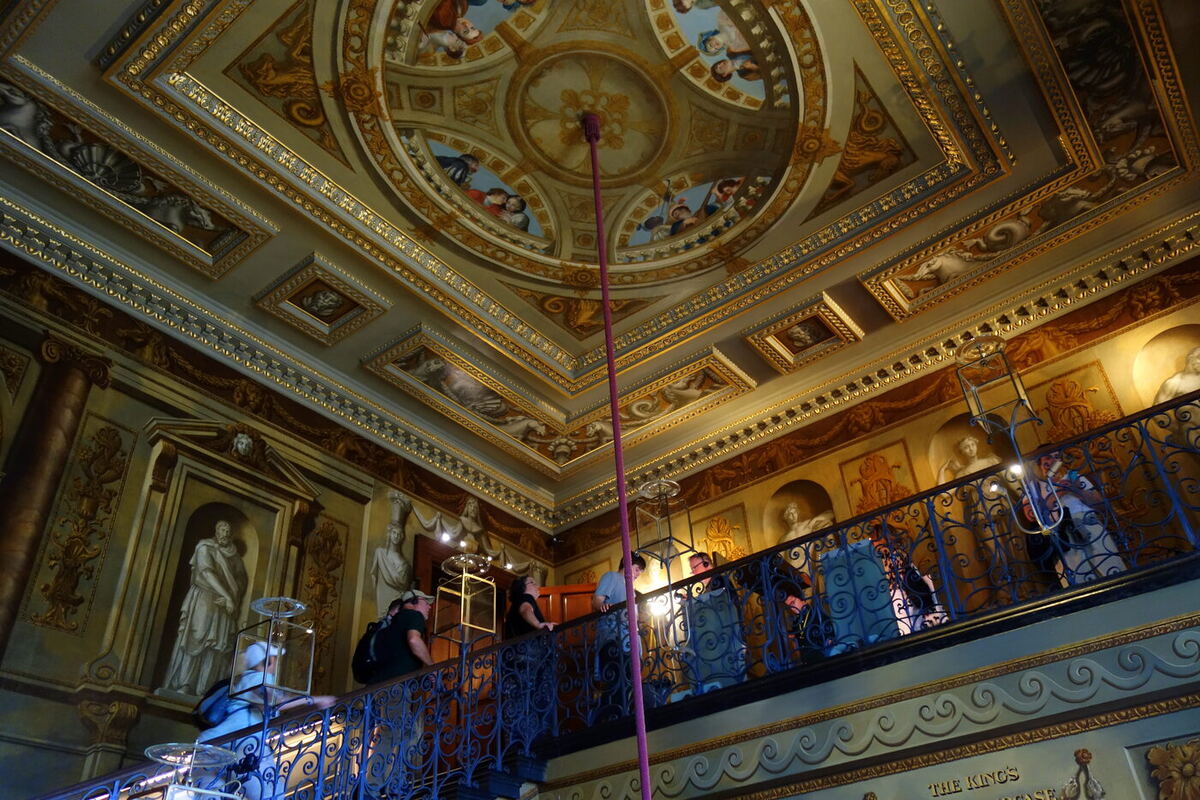
The King's State Apartments
A chain of formal rooms — Presence Chamber, Privy Chamber, Cupola Room, King's Drawing Room — staged the way they functioned for King George I and King George II. The Cupola Room is where the future Queen Victoria was christened in 1819. The King's Gallery at the end displays masterworks from the Royal Collection, including Anthony van Dyck's Charles I at the Hunt.
The Queen's State Apartments (closed until spring 2027)
A more domestic, oak-panelled sequence built for Queen Mary II in the 1690s. The Queen's Bedchamber, Queen's Closet and Queen's Gallery contain pieces of original 17th-century panelling. They closed on 15 June 2026 and are not on the visitor route until spring 2027.
The Last Princesses of Punjab (until 8 November 2026)
Included in palace admission until 8 November 2026. The exhibition tells the story of Princess Sophia Duleep Singh — Queen Victoria's goddaughter and a leading London suffragette — and the women who shaped her. Source: HRP — The Last Princesses of Punjab.
The Victoria: A Royal Childhood exhibition
Permanent rooms on the ground floor, in the suite where Queen Victoria was born on 24 May 1819 and grew up under the strict regime that became known as the Kensington System. Highlights include her childhood dolls, her christening gown, and the Red Saloon where, on 20 June 1837, she held her first Privy Council the morning she became queen at age 18.
The Jewel Room
A small but high-impact room of working royal regalia, including pieces worn by Diana, Princess of Wales, and (rotating) items linked to Catherine, Princess of Wales.
The Sunken Garden and Diana statue
Outside the public entrance, the formal Sunken Garden — Diana's favourite spot inside the palace grounds when she lived in Apartments 8 and 9 — now houses the bronze statue of her, unveiled by Princes William and Harry on 1 July 2021, on what would have been her 60th birthday. The garden is included with palace admission.
Who lives in Kensington Palace right now?
This is the question we get more than any other at the hotel desk. There are five family units in residence in 2026, all using separate apartments around the main palace block and its outbuildings:
- Apartment 1A — The Prince and Princess of Wales (Prince William and Catherine, Princess of Wales). Apartment 1A is a 20-room wing previously occupied by Princess Margaret from 1963 to 2002. William and Kate refurbished it in 2013 and have used it as their London base ever since, although their primary family home with Princes George and Louis and Princess Charlotte has been Forest Lodge in Windsor since 2022.
- Apartment 10 — Prince and Princess Michael of Kent, long-term residents since 1979.
- Wren House — The Duke of Kent (the late Queen's first cousin) and the late Duchess of Kent's family.
- Old Stables — The Duke and Duchess of Gloucester.
- Ivy Cottage — Princess Eugenie, her husband Jack Brooksbank and their children.
The palace's working-residence character is why King Edward VIII reportedly nicknamed it "the Aunt Heap." None of these apartments is open to the public — the visitor route is in the State Apartments wing on the opposite side of the palace.
When was Kensington Palace built?
The original building was a Jacobean manor called Nottingham House, completed around 1605. It became a royal palace in 1689 when King William III and Queen Mary II bought it from the 2nd Earl of Nottingham — William's asthma was aggravated by the damp of Whitehall, and he wanted somewhere on higher ground further west. Sir Christopher Wren was put in charge of the conversion: he added the three-storey corner pavilions that still define the palace's footprint, at a total cost of around £20,000. The Orangery on the north side was commissioned by Queen Anne in 1704 and designed by Nicholas Hawksmoor, with later modifications by John Vanbrugh.
King George II was the last reigning monarch to live at Kensington full-time. After his death in 1760 the palace became a residence for junior royals and royal relatives, and from 1899 the State Apartments were opened to the paying public.
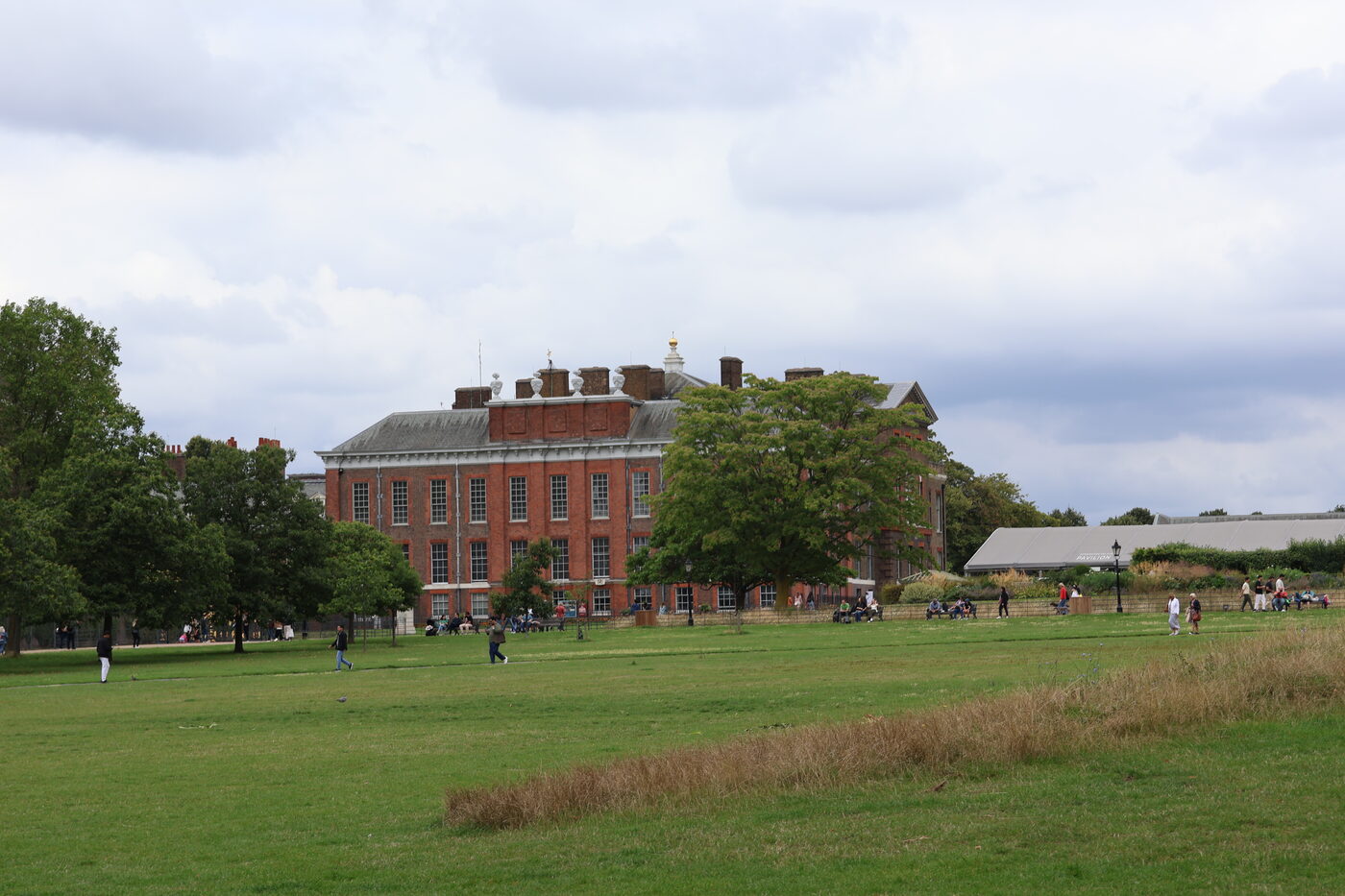
Where is Kensington Palace?
The address for the public entrance is:
Kensington Palace, Kensington Gardens, London W8 4PX
The palace sits inside the western end of Kensington Gardens, with the public entrance gates and ticket office on the east side, facing the Round Pond. The Wikidata entity is Q19599.
How to get to Kensington Palace
By Tube, the closest stations are roughly equidistant on foot:
- Queensway (Central line) — 7 minutes' walk
- High Street Kensington (Circle / District) — 10 minutes' walk
- Bayswater (Circle / District) — 12 minutes' walk
- Gloucester Road (Piccadilly / Circle / District) — 18 minutes' walk
By bus, the most useful routes are the 70, 94, 148, 390 and 9 — all of which stop within a few minutes of the gates.
On foot from the Holiday Inn Kensington Forum, the walk is the prettiest option:
- Leave the hotel at 97 Cromwell Road and head east on Cromwell Road for two blocks.
- Turn left (north) up Exhibition Road, past the V&A, the Natural History Museum and the Science Museum.
- Cross Kensington Road into Kensington Gardens, past the Albert Memorial.
- Follow the path west, past the Round Pond. The palace gates are on your left.
Total: about 1.4 miles, 25–28 minutes at a relaxed pace, all on park paths and pavement. It is one of the nicest walks in central London and gets you four major museums on the way.
Tips: when to go, and what to combine it with
- Best time of day: First entry at 10:00 — the King's Staircase room is at its quietest in the first hour. Tour buses tend to arrive between 11:30 and 13:00.
- Best day of week: Wednesday is the quietest open day. Weekends are noticeably busier, especially Sundays in summer.
- Combine with the museums: Because the walk from the hotel goes past the V&A, Natural History Museum and Science Museum, a sensible day plan is: museum at 9:30 → palace at 12:30 → lunch in Kensington High Street → Hyde Park back to the hotel.
- Combine with the Royal Albert Hall: The Royal Albert Hall is on the southern edge of Kensington Gardens, ten minutes from the palace gates. A matinee tour of the Hall plus the palace makes a strong half-day pairing for first-time visitors.
- Is Kensington Palace worth it? Honestly, yes — but it rewards the audio guide. Without it, the King's State Apartments can read as "a series of old rooms." With it, you get the politics, the personalities and the Kent ceiling jokes that make the place click.
FAQs
Can you visit Kensington Palace? Yes. The King's State Apartments, exhibitions, Jewel Room and Sunken Garden are open to ticket-holders Wednesday to Sunday. The Queen's State Apartments are closed until spring 2027. The working royal apartments (1A, 10, Wren House, Old Stables, Ivy Cottage) are not open to the public.
How much is a Kensington Palace ticket in 2026? £24.70 for an adult and £12.40 for a child under 16, as listed by HRP through 28 August 2026 (includes The Last Princesses of Punjab until 8 November). Free for HRP Members; £1.00 for visitors on qualifying UK benefits.
Who lives at Kensington Palace? In 2026: the Prince and Princess of Wales (Apartment 1A, as their London base); Prince and Princess Michael of Kent (Apartment 10); the Duke of Kent (Wren House); the Duke and Duchess of Gloucester (Old Stables); and Princess Eugenie's family (Ivy Cottage).
When was Kensington Palace built? The Jacobean Nottingham House on the site dates from around 1605. It became a royal palace in 1689 when William III and Mary II bought it and Christopher Wren remodelled it. The State Apartments first opened to the public on 24 May 1899.
Is Kensington Palace worth visiting? For first-time visitors to London with a half-day to spare, yes — it is the most accessible working royal palace in the city, with a smaller-than-Buckingham scale that makes the history feel close. It is also the only place to see the William Kent staircase and the rooms where Queen Victoria was born and crowned.
How do I get to Kensington Palace from South Kensington? On foot via Exhibition Road and Kensington Gardens — about 25 minutes from 97 Cromwell Road. By tube, take the Circle or District line one stop from Gloucester Road to High Street Kensington (10 minutes' walk from there).
Conclusion
Kensington Palace is the rare central-London royal house that is genuinely a working home and a paying-public museum at the same time. Mary II's rooms are off the route until spring 2027; what you get instead is the King's State Apartments, the Victoria childhood rooms, and — until 8 November 2026 — The Last Princesses of Punjab. The Holiday Inn Kensington Forum sits 1.4 miles south of the gates. Walk through Kensington Gardens in daylight; after dusk the gardens are closed and the street route is the way back.
Sources & further reading
- Historic Royal Palaces — Kensington Palace visitor information, Tickets and prices and The Last Princesses of Punjab
- Historic Royal Palaces — Membership and £1 tickets
- Wikipedia — Kensington Palace
- Wikipedia — Statue of Diana, Princess of Wales, Kensington Palace
- The Royal Parks — Kensington Gardens
- Wikidata — Kensington Palace (Q19599)
Images: Kensington Palace exterior by Ricardalovesmonuments (CC BY-SA 4.0) via Wikimedia Commons; King's Grand Staircase by Daderot (CC0 public domain) via Wikimedia Commons; east front by DiscoA340 (CC BY-SA 4.0) via Wikimedia Commons.


_01.jpg)
Compiled by the Holiday Inn Kensington Forum Local History Desk. Last verified 20 August 2026.