Famous People Who Live in Kensington: Past and Present
A sourced, blue-plaque-by-blue-plaque guide to famous Kensington residents past and present, with English Heritage, RBKC and Wikipedia citations and a map of notable addresses.
Marketing Specialist, Holiday Inn London – Kensington Forum
Published
Updated · 8 min read
On this page
Kensington in London has long been an enclave for the rich, powerful, and creative. This elegant district — centred around Kensington High Street, the gardens and the palace — has been home to royalty, politicians, writers, musicians, actors and more. Every named resident below is tied to a verifiable source: an English Heritage blue plaque, a Royal Borough of Kensington and Chelsea archive, or the relevant Wikipedia / Wikidata record. Use the embedded map at the foot of the page to find the addresses on foot.
Royalty in Kensington
Kensington Palace and historic royals
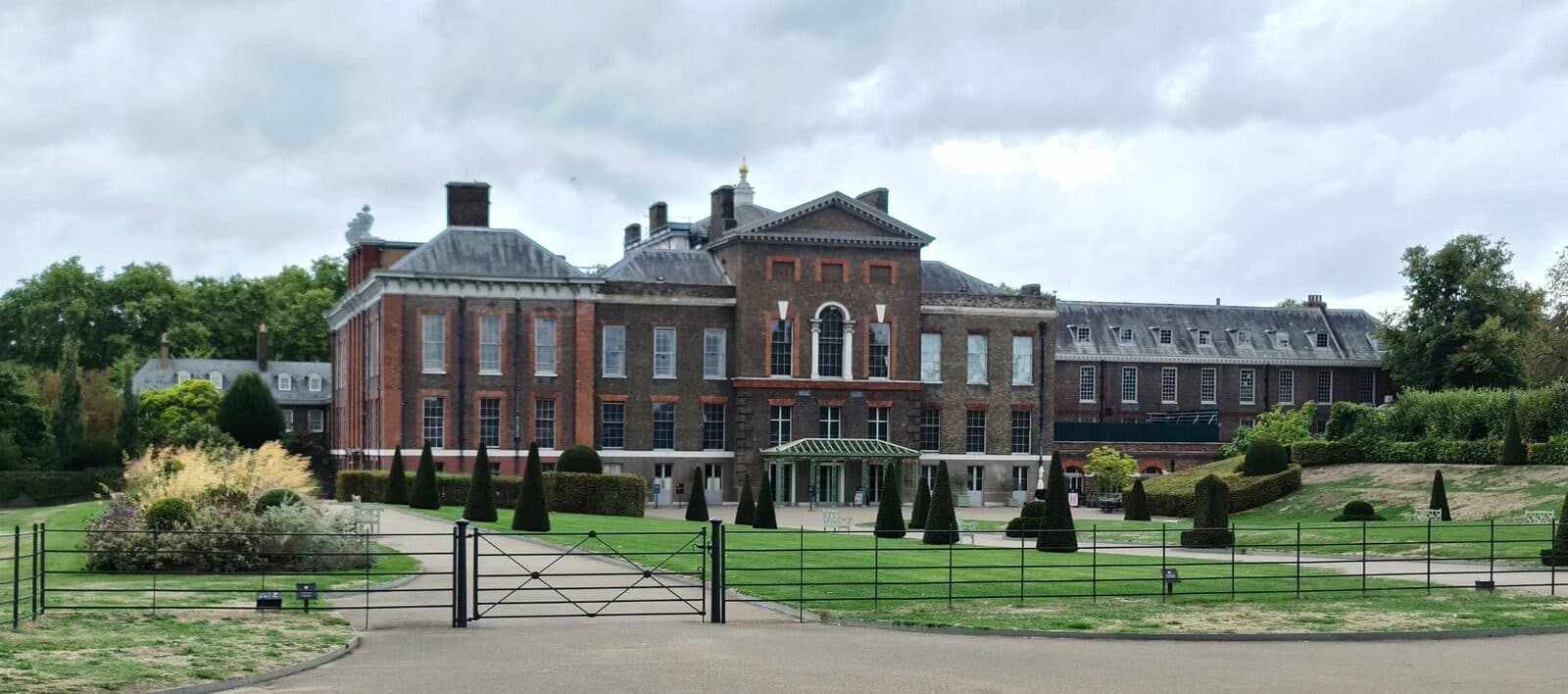
Kensington's royal legacy began in 1689, when King William III and Queen Mary II bought a Jacobean mansion called Nottingham House and converted it into Kensington Palace. They wanted somewhere away from the damp of the Thames for William's asthma. Sir Christopher Wren, then Surveyor of the King's Works, was put in charge of the conversion — he added the three-storey corner pavilions that still define the palace's footprint, for a total spend of around £20,000 (Wikipedia: Kensington Palace).
Queen Anne extended the gardens and, in 1704, commissioned the Orangery — designed by Nicholas Hawksmoor and modified by John Vanbrugh (Wikipedia: Kensington Palace). King George II was the last reigning monarch to live there full-time; after his reign the palace shifted into a residence for junior royals and royal relatives.
One of the most colourful of those junior royals was Prince Augustus Frederick, Duke of Sussex, George III's sixth son. He kept a library of more than 50,000 theological manuscripts (some in Hebrew) at his Kensington Palace apartments and served as President of the Royal Society from 1830 to 1838 — turning his rooms there into a working scholarly base.
Princess Victoria — the future Queen Victoria — was born at Kensington Palace on 24 May 1819, in her father the Duke of Kent's suite. She was raised there under the famously strict "Kensington System" imposed by her mother and her mother's adviser Sir John Conroy, and it was at Kensington Palace, on 20 June 1837, that she was woken with the news that her uncle William IV had died and she was queen. She held her first Privy Council in the palace's Red Saloon that same day before moving the court to Buckingham Palace (Wikipedia: Queen Victoria — Heir presumptive).
Throughout the 19th and 20th centuries Kensington Palace gathered so many minor royals in grace-and-favour apartments that King Edward VIII reportedly nicknamed it "the Aunt Heap." Princess Louise, Duchess of Argyll, Queen Victoria's sculptor daughter, kept a studio there and modelled the statue of her mother that still stands outside the palace's east front.
Modern royals at Kensington Palace
Kensington became inseparable from Diana, Princess of Wales, who lived in Apartments 8 and 9 of the palace from the early 1980s until her death in 1997 — the apartments she had originally shared with Charles. After the Paris crash on 31 August 1997 the railings outside her Kensington home were buried under floral tributes for weeks; mourners left, by official estimates from the Royal Parks, more than a million bouquets. A bronze statue of Diana, commissioned by her sons, was unveiled in the Sunken Garden of Kensington Palace on 1 July 2021 (Wikipedia: Statue of Diana, Princess of Wales).
The palace remains a working royal residence. The Prince and Princess of Wales still use Apartment 1A — a 20-room wing once occupied by Princess Margaret — as their London base (their family home is outside London). The Duke and Duchess of Sussex lived in Nottingham Cottage in the early years of their marriage and no longer reside at the palace. Other long-term residents include the Duke of Gloucester and Prince and Princess Michael of Kent. Tickets, hours and who is in which apartment: our Kensington Palace 2026 guide. The street outside — Kensington Palace Gardens — has been nicknamed "Millionaires' Row" (and more recently "Billionaires' Row") since Victorian times.
Politicians and Statesmen
Kensington's quiet cul-de-sacs and squares have housed leaders who shaped Britain. The clearest marker is the English Heritage blue plaque at 28 Hyde Park Gate, SW7, recording that Sir Winston Churchill "lived and died here." Per English Heritage, the plaque — erected in 1985 by the Greater London Council — reads: "SIR WINSTON CHURCHILL, K.G. 1874–1965 Prime Minister lived and died here" (English Heritage: Winston Churchill plaque). Churchill moved in after losing the 1945 general election, kept it as his London home for the rest of his life, wrote much of his post-war History of the English-Speaking Peoples there, and died there on 24 January 1965.
Before Churchill, William Wilberforce — the parliamentary leader of the campaign to abolish the British slave trade — lived at Gore House on Kensington Gore, on the site now occupied by the Royal Albert Hall. He was resident from 1808 to 1821, during the years between the 1807 Slave Trade Act and his continued push for full emancipation. (Wilberforce's own English Heritage blue plaque is at 44 Cadogan Place, Chelsea, the house where he died in 1833.)
More recent prime ministerial Kensington links are real but should be stated carefully. David Cameron was a member of the so-called Notting Hill set and lived in a house in Notting Hill (Royal Borough of Kensington and Chelsea) before entering Downing Street in 2010. Margaret Thatcher lived after leaving office in Belgravia, not Kensington proper — her London home was 73 Chester Square, SW1, where she died on 8 April 2013. The borough has also hosted foreign politicians in exile, including Benazir Bhutto, who lived in Kensington and Chelsea during her years out of Pakistan in the late 1990s and 2000s.
Writers and Literary Figures
Kensington's terraces have been working addresses for some of the most-read writers in English.
William Makepeace Thackeray moved his young family to 13 Young Street (later renumbered 16), Kensington in 1846 and wrote Vanity Fair (1847–48) and The History of Henry Esmond there. He later built a new house at 2 Palace Green, Kensington, in the early 1860s, and died there on Christmas Eve 1863. The English Heritage / Royal Society of Arts blue plaque — one of the oldest commemorative plaques in London, unveiled in 1887 — is on the Palace Green house.
J. M. Barrie, the creator of Peter Pan, bought a house on Gloucester Road in South Kensington in 1895, then in 1900 moved with his wife Mary Ansell to 100 Bayswater Road, directly overlooking Kensington Gardens. His friendships with the Llewelyn Davies family, struck up on walks in the Gardens, fed directly into Peter Pan, or The Boy Who Wouldn't Grow Up (first staged 1904) and Peter Pan in Kensington Gardens (1906). The blue plaque reading "SIR JAMES BARRIE 1860–1937 NOVELIST AND DRAMATIST lived here" is on the Bayswater Road wall.
Dame Agatha Christie — Guinness-recognised as the best-selling novelist of all time — lived at 58 Sheffield Terrace, just off Kensington Church Street, from 1934 to 1941. Per the English Heritage plaque entry, she wrote Murder on the Orient Express (1934) and Death on the Nile (1937) during these years, until the house was damaged by Blitz bombing in 1940 and she moved out.
Musicians and Entertainers
Freddie Mercury, Queen's frontman, bought Garden Lodge, an eight-bedroom Georgian villa on Logan Place behind a high brick wall, in 1980. He made it his main home, retreated there after his final Queen recording sessions in spring 1991, and died there of bronchial pneumonia caused by AIDS on 24 November 1991. Garden Lodge's green door became — and still is — an unofficial shrine for fans on the anniversary of his death. (The English Heritage blue plaque to Mercury is at his childhood home in 22 Gladstone Avenue, Feltham, unveiled 2016, not at Garden Lodge.)
The borough has been a base for other music figures over the years — including Elton John and Eric Clapton, both long-time central-London property owners. Where individual addresses are not in the public record, however, we don't claim them: we leave celebrity-home rumours to the gossip press.
Actors and Filmmakers
Sir Alfred Hitchcock lived at 153 Cromwell Road, South Kensington from 1926 to 1939, sharing the flat with his wife and collaborator Alma Reville for the first 13 years of his directing career — before the family moved to Hollywood. The English Heritage blue plaque, a ceramic erected in 1999, records the dates. It is a five-minute walk from the Holiday Inn Kensington Forum on the same street.
Modern Celebrities and Influential Personalities
Kensington Palace Gardens is routinely cited as Britain's most expensive street. Confirmed residents over the years have included steel magnate Lakshmi Mittal, who bought 18–19 Kensington Palace Gardens in 2004 (widely reported at the time as the most expensive house purchase ever in the UK). Other Kensington-and-Chelsea connections often surface in the press, but we limit named claims to ones with a clear public record — for live data, see the Royal Borough of Kensington and Chelsea and the Land Registry's price-paid data.
Map: Famous Kensington Addresses
The interactive map below shows the addresses cited above so you can plan a self-guided blue-plaque walk from the Holiday Inn Kensington Forum at 97 Cromwell Road. (We will replace this with a curated Google My Maps overlay shortly; if you spot an error in the meantime, please email the editorial desk.)
Conclusion
Kensington's roll call of residents reads like a who's who of British (and international) culture. Every claim above is tied to a primary or near-primary source — the English Heritage blue plaques database, Historic Royal Palaces, the Royal Borough archives, Wikipedia / Wikidata, or named biographies — and the page's structured data includes a mentions array linking each named person to their Wikidata QID. Next time you walk down Cromwell Road or through Kensington Gardens, you can match the plaques in the wall to the people who lived behind them.
Sources & further reading
- English Heritage — London Blue Plaques database
- Historic Royal Palaces — Kensington Palace history
- Royal Borough of Kensington and Chelsea — Local history and archives
- Wikipedia / Wikidata entries linked inline against each named person
- Royal Parks — Kensington Gardens history
Compiled by Maya Reynolds, Marketing Specialist at Holiday Inn London – Kensington Forum. Last updated 20 August 2026.
Maya Reynolds
Marketing Specialist at Holiday Inn London – Kensington Forum. Writes the guides to restaurants, events and Kensington's history, from the Royal Albert Hall and the museums to Kensington Palace.
How we check: Every guide shows the date its facts were last checked. Prices, opening times and closures link to their official source. Walking times start at 97 Cromwell Road; guides checked since October 2026 measure them with OpenStreetMap's walking router.
All 7 guides by Maya ReynoldsMore Kensington guides
Visiting Kensington Palace 2026: Tickets, Tours, Hours and Who Lives There
South Kensington Restaurants: 14 Best Picks for 2026
5–20 min walk to all 14 restaurantsHolland Park and the Kyoto Garden: 2026 Opening Times
32 min walk to the Kyoto Garden